
Jos van Immerseel plays ‘La Sylva’ (Forqueray)
This is the original instrument (kept in the “Museum Vleeshuis”, Antwerp), recorded in 2000. The audio is ripped from the CD: Hans Ruckers. His musical legacy, track 9 (NWC)
How it looks
photo’s downloaded from DAMS, “Museums and Heritage Antwerp”, free of copyright
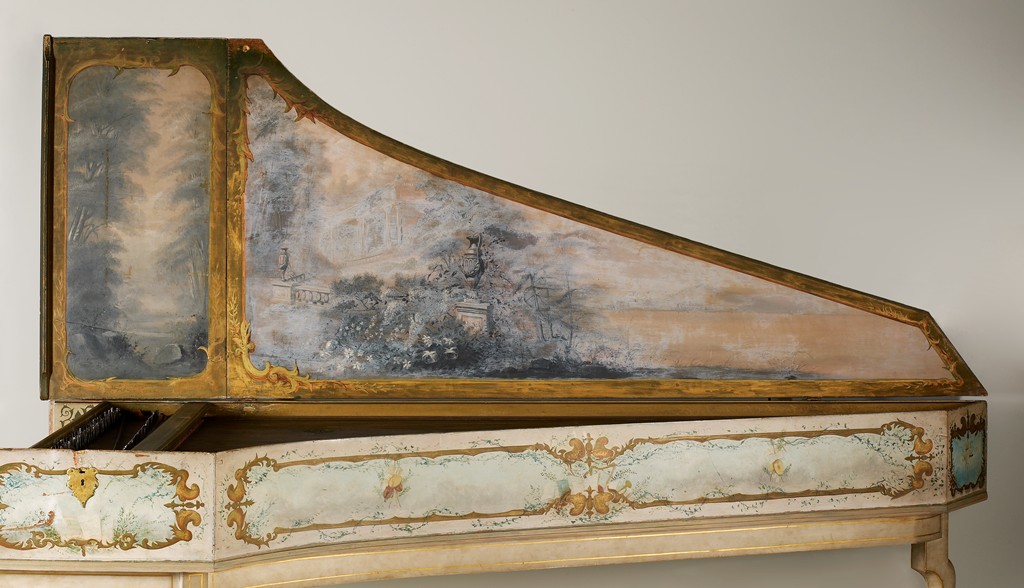
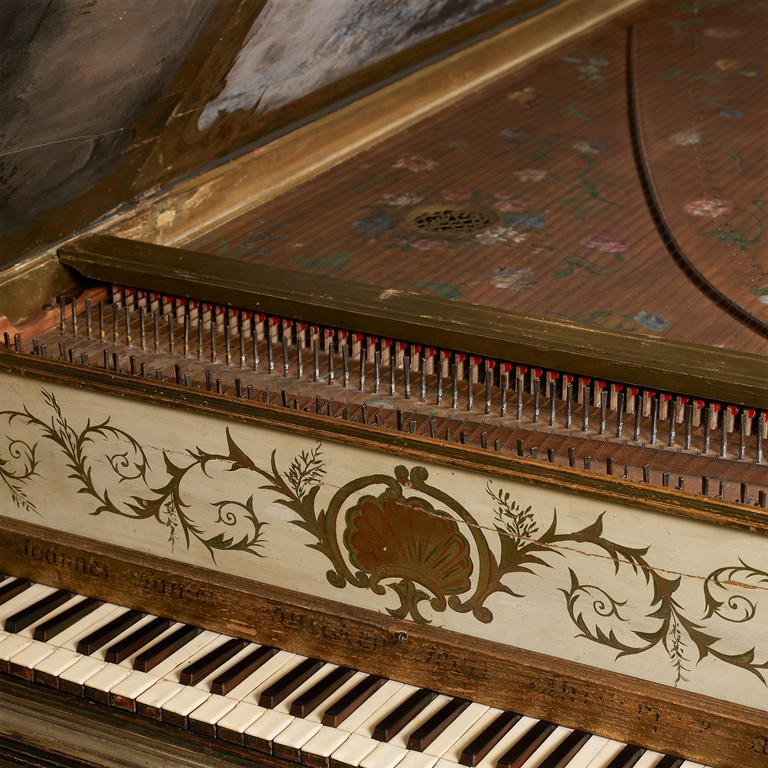
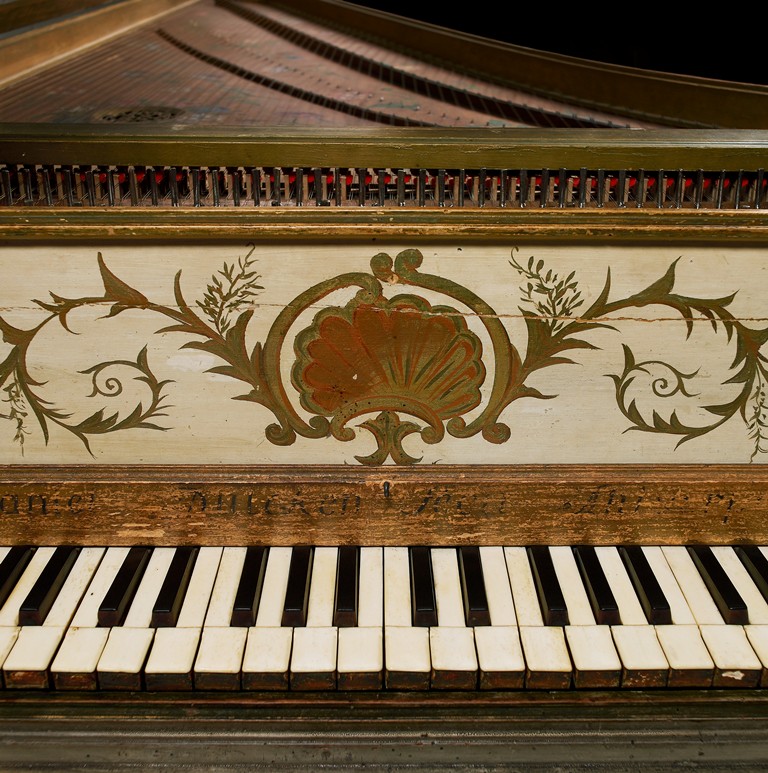
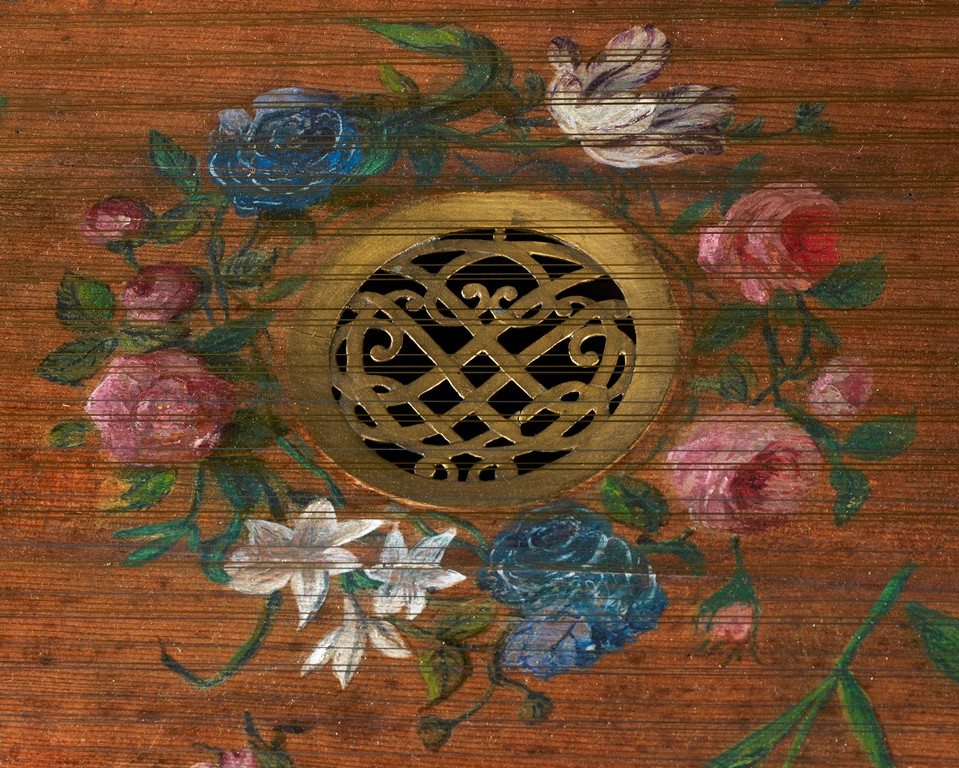
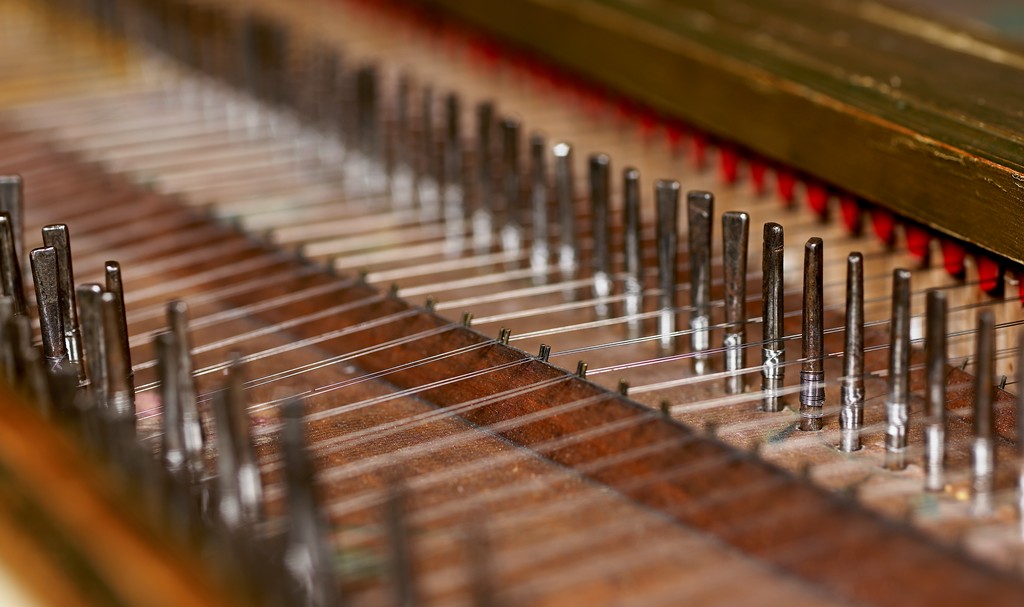
Harpsichord, Joannes Daniel Dulcken, 1747
Museum Vleeshuis (closed). Permanent loan from the Royal Conservatory of Antwerp
2480 x 955 x 263 mm
one keyboard (5 Octaves: F1-f3 )
three stops/registers: 8′ 8′ 4′
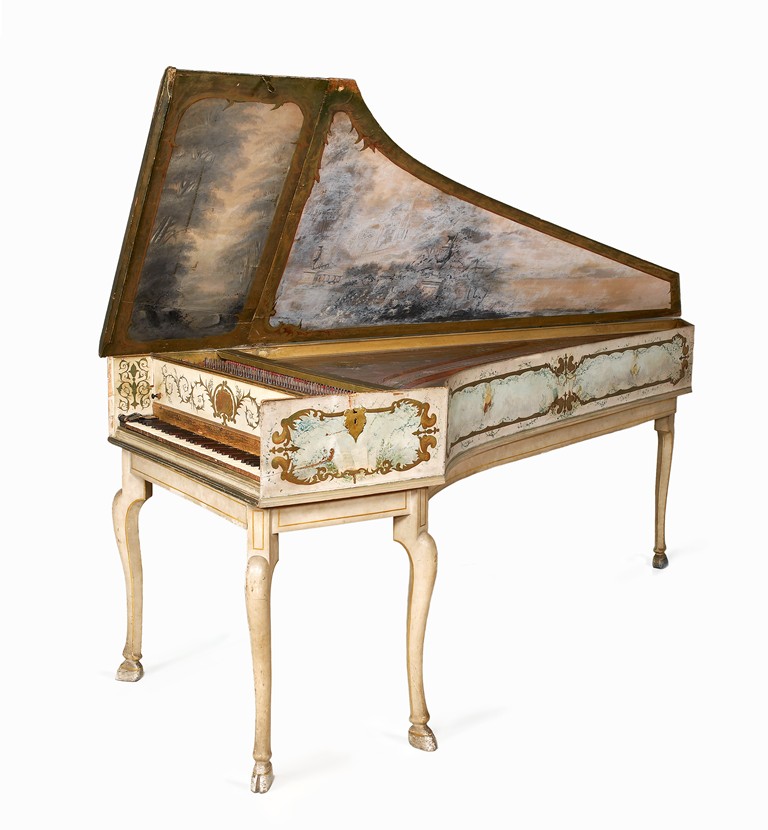
Description
Soberly finished case painted with rococo motifs. The inside of the lid is painted with a classicist garden landscape. The nameplate is also painted with rococo motifs, with register knobs to the left and right. The instrument is signed on the nameplate: Joannes Daniel Dulcken fecit Antverpia anno 1747. The soundboard is painted with flowers. The front 8′ register can be operated by a lever on the soundboard, front left. Rosette with initials ‘JDD’ (Joannes Daniel Dulcken). The double curved case is exceptional (original concept, developed by J.D. Dulcken). Authentic base with cabriole legs. Hubert Bédard (1970-1972). In 1984 new jacks were made by Monika May, and in 1994 the tongues were renewed by Jan Boon. (NB his is the ‘state of the instrument’ on the recording below by Jos van Immerseel (2000/2001). In 2005 Émile Jobin (2005 restored the instrument once more.
Origin
The instrument belonged to César Charles Snoeck and later his heirs (Ronse, shortly before 1872-1923), after which it ended up in the collection of Jean-Auguste Stellfeld (Antwerp, 1923-1941). Stellfeld sold the harpsichord in 1941 to the Royal Conservatory of Antwerp (1941-present). In 1967, the Conservatory gave the instrument on permanent loan to the Vleeshuis Museum. The instrument is used as a teaching instrument for harpsichord students at the Royal Conservatory of Antwerp.
Johan Daniel Dülcken, Harpsichord builder
Johan Daniel Dulcken 1706–57, from North Rhine-Westphalia, Germany, settled in Antwerp 1738. In 1740 he and his wife (Susanna Maria Knöpfflen) became members of the clandestine Antwerp Reformed Church , the ‘Brabantse Olijfberg’. In 1744 he was elected an ‘elder’. Initially renting a single property in Hopland in 1742, Dulcken’s finances had improved sufficiently by 1746 for him to be able to purchase three houses in the same street. Following his death on 11 April 1757 his business was continued by his widow Susanna Maria Dulcken and his youngest son Joannes (born 1742), first in Antwerp and in 1773/4 in Brussels. The eldest son, Johan Lodewijk (Louis) Dulcken (born 1735) also was an instrument maker (organ, harpsichords), first in Amsterdam, then in Hasselt (NL), in 1773 returning to Antwerp. In the 1780s he is in Paris. Next to harpsichords he also made pianofortes.
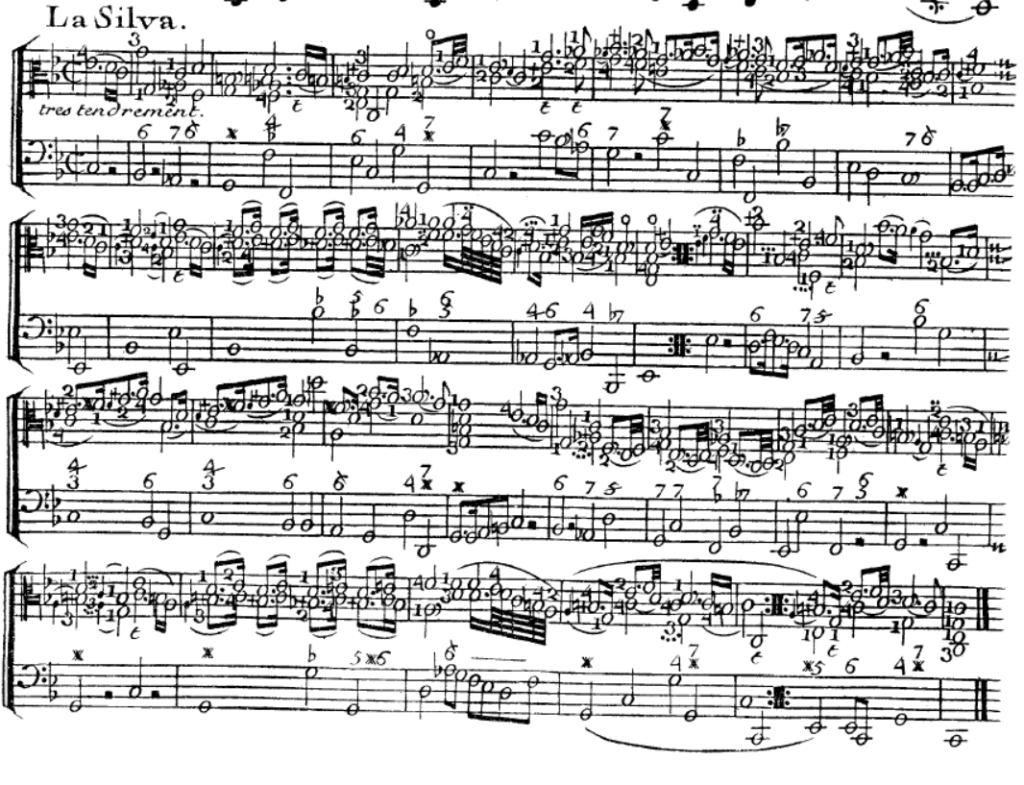
La Sylva (from the 5the suite of Forqueray’s Pièces de viole, 1747)
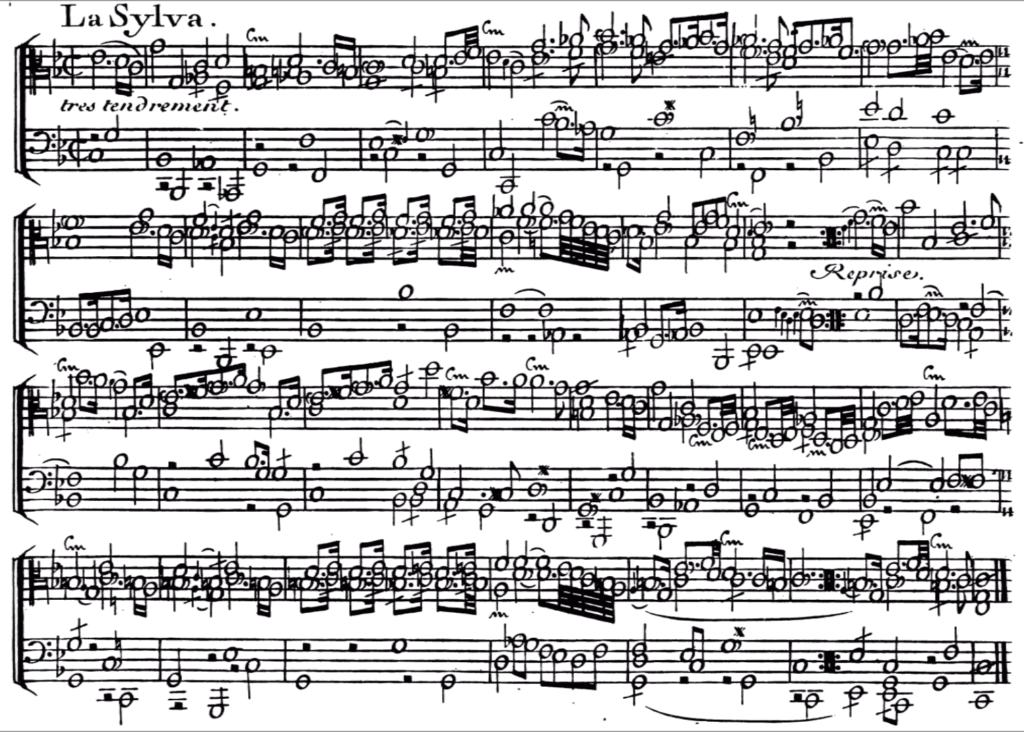
In 1747 Jean-Baptise Forqueray (1699-1782) published a volume dedicated to his pupil Princess Henriette-Anne (daughter of Louis XV) entitled Pieces de viole avec la basse continuë composées par Mr Forqueray le père (Paris, 1747). The attribution of these pieces to Antoine Forqueray remains enigmatic. Harmonically, the pieces are full of diminished and augmented chords, Neapolitan sixths, chords of the ninth and colourful progressions. In the avertissement to the publication Forqueray jr. (Jean-Baptise, le fils) admits to adding the bass (and thus the figures) and fingering the viol part himself. Three pieces which he claims are solely his work are marked with an asterisk, but they are stylistically indistinguishable from the other 29, ostensibly by his father Antoine (le père 1672-1745). It thus remains unclear to what extent these are the father’s work or the son’s. Simutaneousle, Jean-Baptiste published them in a version for solo harpsichord, possibly made by Marie-Rose Dubois, his wife, a celebrated harpsichordist. These idiomatic transcriptions fundamentally reinterpret the material, making greater use of counterpoint, bass octaves and flowing arpeggiated bass figurations.
“The original” (Bass, numbers, and fingering by Jean-Baptiste)
The transcription
This is the transcription of harpsichord, published by Jean-Baptiste, but – probably – made by his wife: Marie-Rose Dubois, a celebrated harpsichordist.
18 juni 2025, Dick Wursten